
Questions to Ask When Looking for Assisted Living
The best questions to ask when looking for assisted living cover cost, staffing, health care, safety, and contract terms. After comparing tour checklists from AARP, A Place for Mom, and Caring.com, one pattern stands out: families rarely regret asking too much. They regret the fee, the ratio, or the discharge policy they never asked about.
Choosing a community for a parent is emotional, and a polished lobby can hide gaps in memory care, medication management, or monthly fees. This guide gives you organized questions, a tour strategy, and contract red flags, so your family can compare each assisted living facility with calm, clear confidence.
First Questions to Ask When Looking for Assisted Living Over the Phone
Start with phone screening before you spend a Saturday on tours. Ask about available unit types, whether all rooms and bathrooms are private, and whether the assisted living community offers memory care. Most callers reach a sales representative, so expect polished answers and probe for specifics.
Request a sample contract early, along with the price list. Ask which health care services are included, what changes if care needs increase, and under what circumstances a resident must move out. These four answers quickly separate transparent providers from vague ones before you invest emotional energy.
Questions to Ask When Looking for Assisted Living About Costs and Fees
Money questions feel awkward, yet they protect your family most. Ask whether pricing is all-inclusive or à la carte, how monthly fee increases work, and which add-ons, such as medication management or incontinence supplies, cost extra. Nationally, the median monthly bill is $6,200, so hidden charges matter.
Also ask about entrance fees, security deposits, refund policies, and move-in specials. A rent-lock program can steady your budget, while a la carte add-ons can quickly inflate it. Compare written quotes side by side, using the same care level for every community.
| Ask | Why it matters |
| Is pricing flat or tiered by care level? | Shows your true monthly bill |
| How often do rents rise, and by how much? | Lets you plan a multi-year budget |
| Which services cost extra? | Transport, laundry, and supplies add up |
| What is refundable if we move out? | Clarifies deposits and entrance fees |
| Care setting | National median annual cost (2025) |
| Assisted living | $74,400 |
| Nursing home, semi-private room | $114,975 |
| Nursing home, private room | $129,575 |
What Happens If Your Loved One Runs Out of Money?
Ask directly whether the community accepts Medicaid, and how that arrangement works if savings run dry. Medicare doesn’t typically cover assisted living, and Medicaid help depends on your state. Get the policy in writing, and confirm whether your parent can stay in the same room. Questions to Ask When Looking for Assisted Living About Caregivers and Staffing
Caregivers shape daily life more than any chandelier does. Ask for the staff-to-resident ratio during the day and overnight, plus who supervises the team and whether a licensed nurse is on site. Also ask how the community covers shortages, including agency temps.
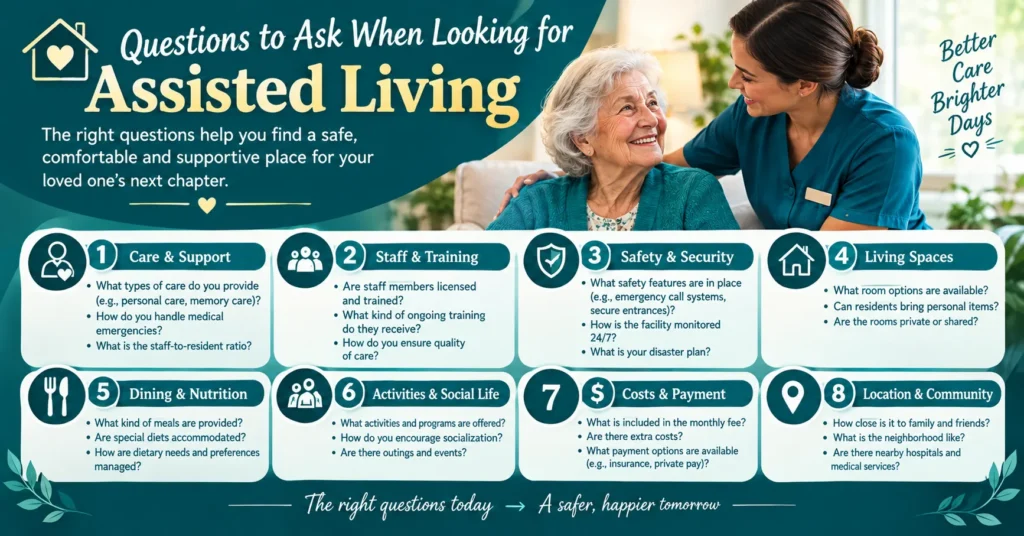
Training matters just as much as headcount. Ask about background checks, dementia and emergency training, and how caregivers are matched with residents. During the tour, notice whether team members greet residents by name. Warm, unhurried interactions usually reveal more than any brochure ever could.
| Ask | A strong answer sounds like |
| What is the day and night ratio? | Specific numbers, not “plenty” |
| Who supervises caregivers? | A named nurse or director |
| What is your turnover rate? | Openness plus a retention plan |
| Do you use agency temps? | Limited use with a continuity plan |
Staff Turnover and Leadership Stability
High turnover disrupts consistent care, so ask how long the executive director and director of nursing have stayed. Ask about average caregiver tenure, too. Ownership changes can also unsettle teams, so ask whether the community was recently sold and what changed afterward.
Questions to Ask When Looking for Assisted Living About Health Care and Medication
Assisted living supports activities of daily living, but it is not a hospital. Ask who manages medications, whether self-administration is allowed, and how the staff responds to falls or medical emergencies. Clarify which conditions the community cannot manage, so surprises do not force a rushed move later.
If your loved one has dementia, diabetes, or mobility limits, share those details honestly. Ask whether memory care is available on campus, whether hospice residents are welcome, and how physical therapy or home health visits are coordinated. Honest disclosure helps the community judge fit accurately.
Care Plans and Pre-Entry Assessments
Ask whether a clinician assesses your parent before move-in and whether each resident receives a written care plan. Find out who helps shape it, how often it is updated, and how families can appeal a care decision. A living plan prevents guesswork.
Questions to Ask When Looking for Assisted Living About Safety and Licensing
Safety starts with details you can see. Look for handrails, call buttons, well-lit hallways, marked exits, and working fire detection. Ask about the emergency response system in each room, backup power during outages, and how staff regularly practice evacuation plans.
Cleanliness tells its own story. Notice odors, worn flooring, and how quickly staff answer call lights. Then ask how often common areas are cleaned and who maintains the grounds. A community that welcomes unscheduled questions about safety usually has little to hide.
Inspection Reports and State Licensing
Assisted living licensing is set and enforced state by state, so rules vary widely. Ask to see the most recent inspection report, then check your state agency’s website for complaints. Your state’s long-term care ombudsman can also help you understand complaint history.
Questions to Ask When Looking for Assisted Living About Dining Services
Meals anchor a resident’s day, so taste the food if you can. Ask how many meals are served, whether times are fixed, and how kitchens handle allergies, diabetic menus, or texture-modified diets. Request a sample menu, and ask whether snacks are available between meals.
Ask whether guests can join a meal and what that costs. Visit during lunch to watch the dining room. Are residents chatting, or eating alone? Do staff assist patiently? Mealtime is where social connection, nutrition, and dignity show up together.
Questions to Ask When Looking for Assisted Living About Activities and Lifestyle
A calendar full of events means little if nobody attends. Ask how the community measures resident satisfaction, who plans activities, and how staff adapt them for different mobility or cognitive levels. Request a current calendar and compare it with what you observe during your visit.
Think about your parent’s personality, not just their needs. A retired teacher may want a library and lectures, while a former gardener may want raised beds. Ask about outings, volunteer visits, faith services, transportation, and outdoor spaces that support meaningful routines.
Questions to Ask When Looking for Assisted Living About Rooms and Accommodations
Ask which floor plans exist and what each costs per month. Confirm whether rooms are private or shared, bathrooms are private, and doorways fit walkers or wheelchairs. Check natural light, temperature control, and whether a kitchenette is included, since small details shape daily comfort.
Ask whether couples can share an apartment and how the community supports them if care needs differ. Learn how roommate conflicts are resolved. A safe for valuables and a clear complaint process also help residents feel secure in their new home.
Pets, Furnishings, and Personal Belongings
Familiar objects ease the move. Ask whether residents can bring their own furniture, decorate freely, and keep a pet, plus any weight or breed limits. Ask about pet-care help and fees. A recliner from home can matter more than any amenity.
Questions to Ask When Looking for Assisted Living Before Signing a Contract
Take the contract home and review it with family, not at the sales desk. Confirm that every promised service, fee, and level of care is written down. Ask how rate increases and late payments work, and get unclear language clarified in writing before anyone signs.
Also confirm whether the community holds your parent’s apartment during a hospital stay, and at what cost. Ask who decides when a higher level of care is needed. Contracts reveal priorities, so read them as carefully as you would a mortgage.
Arbitration Clauses and Move-Out Policies
Arbitration clauses can send disputes outside the court system and may limit your legal options, so ask about them directly. Ask how much notice a resident receives before being asked to leave, and what triggers that decision. Consider an elder law attorney’s review.
Questions to Ask When Looking for Assisted Living While You Tour
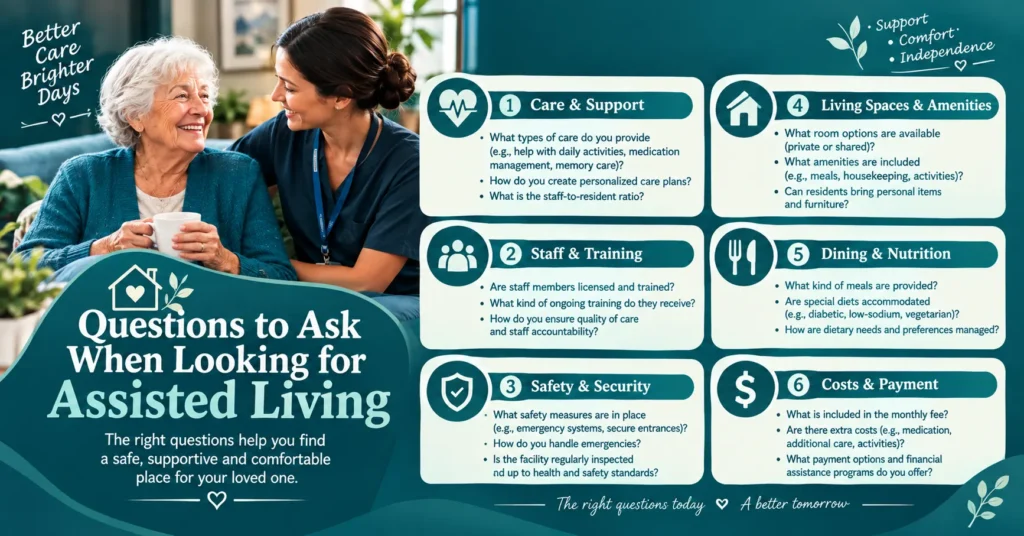
Visit more than once, at different times, including a mealtime. Bring your loved one when possible, and encourage their questions. Speak with department heads, especially the executive director and nursing director, and ask residents what they enjoy and wish they had known before moving in.
Use one checklist for every community so comparisons stay fair. Score cleanliness, warmth, responsiveness, and transparency immediately after each visit, before details blur together. Tour several communities, spacing visits out, because the first place that feels right may not be the best match.
| Look for | Red flag |
| Residents engaged and greeted by name | Residents ignored, call lights unanswered |
| Clean rooms and fresh air | Persistent odors, worn flooring |
| Staff who welcome hard questions | Vague replies, pressure to sign quickly |
| A full calendar matched by real activity | An empty activity room during scheduled events |
Expect Staff to Ask Questions Too
Good communities ask questions back. Expect inquiries about your parent’s routines, worries, and health history. That curiosity signals genuine interest in fit, not just filling a unit. Answer candidly, because clear information helps staff tell you honestly whether they can meet your loved one’s needs.
Watching for Sales Tactics and Referral Conflicts
The person guiding your tour is often in marketing or sales, whatever their title says, and referral agencies may earn compensation from communities. Both can help, but verify claims yourself through inspection reports, resident conversations, and references. Skepticism is not rudeness; it is due diligence for someone you love.
Questions to Ask When Looking for Assisted Living: Turning Answers Into a Decision
Once the tours end, revisit what mattered most before you began. Which services are essential, which are nice extras, and which can your loved one live without? Involve them in the decision, and consider a short trial stay so daily life feels real before committing.
The right questions to ask when looking for assisted living will not remove every worry, but they replace fear with facts. Compare answers side by side, trust your instincts, and lean on a senior living advisor or elder law attorney where needed. You are doing this out of love.
Conclusion
Choosing assisted living is an important decision that deserves careful thought and plenty of questions. The right community should offer more than comfortable roomsit should provide dependable care, a safe environment, respectful staff, engaging activities, and a lifestyle that suits the resident’s needs and preferences. Asking about costs, healthcare, staffing, meals, activities, safety, and daily routines can help families understand what life will really be like there.
It is also worth visiting several communities and paying attention to how staff interact with residents. Taking time to compare your options can make the process less stressful and lead to a choice that feels comfortable, informed, and right for everyone involved.
FAQs
Author

Hi, I’m Alex, and I enjoy learning through quizzes, trivia, and interactive questions. I love discovering new conversation starters, relationship topics, and educational challenges. This website is my go-to place for fun, practical, and reliable question-based content. I’m always excited to learn something new and share it with others.