
Me perdí en Medellín Questions: Chapter Guide for Teachers
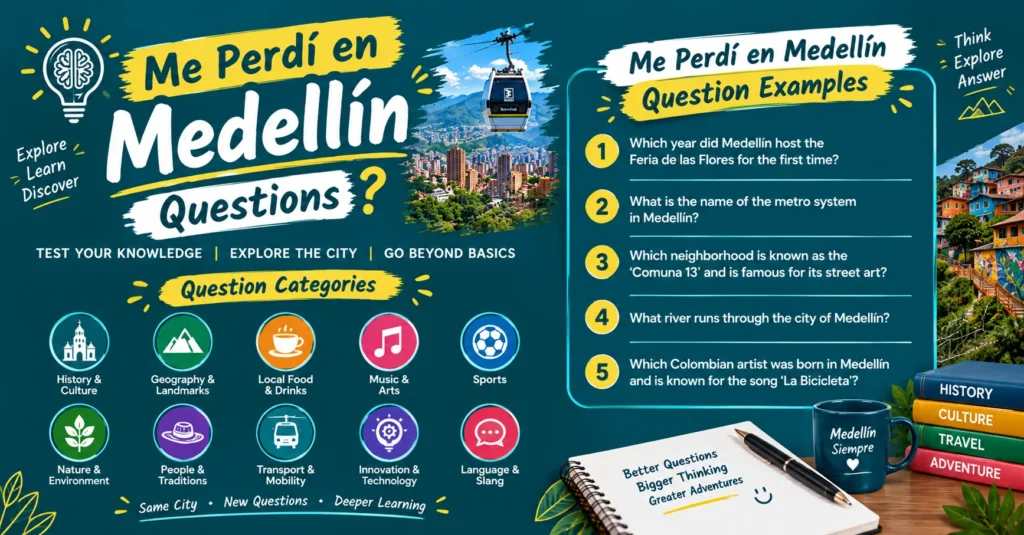
If you’re searching for Me perdí en Medellín questions, you’re probably prepping a novel unit, studying for a quiz, or trying to make sense of a chapter you just read. This guide walks through the book chapter by chapter, pulling out the key vocabulary, comprehension questions, and discussion prompts that Spanish 2 and Spanish 3 classes actually use with this reader.
Me perdí en Medellín, written by Colombian author and Comprehensible Input specialist Adriana Ramírez, follows a Canadian tourist named Andrew who gets separated from his friends in Medellín with no cellphone data, little cash, and limited Spanish. A local named Andrés offers to walk him home, but first they run a string of errands together and through those errands, Andrew gets a real, unscripted look at paisa culture, the people of Medellín, rather than the postcard version most guidebooks show.
What Me perdí en Medellín Questions Usually Cover
Most classroom question sets built around this reader fall into three buckets: comprehension checks (what actually happened), vocabulary application (using new words in context), and cultural reflection (what Andrew is learning about Medellín that he didn’t expect). The chapter breakdown below follows that same pattern, so you can use it as a study sheet, a discussion starter, or a template for your own worksheet.
A quick note before you dig in: this guide is built for study and discussion use, not as a substitute for the book itself or for the official Teacher’s Guide. Chapter numbering and pacing can vary slightly depending on which edition you’re using, so check your own copy if a question doesn’t quite line up.
Prólogo and Capítulo 1: ¿Dónde Estoy? Questions
The book opens with Andrew realizing he’s lost no phone signal, unfamiliar streets, and a shaky grasp of Spanish to ask for help. This section sets up the central tension of the whole story: a visitor who has to rely entirely on the kindness and patience of strangers.
Comprehension questions:
- ¿Cómo se siente Andrew al principio del libro? ¿Por qué?
- ¿Qué problemas tiene Andrew cuando se da cuenta de que está perdido (el teléfono, el dinero, el idioma)?
- ¿Por qué crees que el autor eligió empezar la historia con Andrew ya perdido, en vez de mostrar cómo se perdió?
Vocabulary in context: perderse, estar perdido, esperanza, miedo, confundir, preguntar, esperar.
Discussion prompt: Have you ever been lost in an unfamiliar place? What was the first thing you did? Compare your instinct to Andrew’s.
Capítulo 2: Regálame un Tinto Questions
Andrew meets Andrés, who offers to help him get home but first invites him to share a tinto (a small, strong Colombian coffee) a small but meaningful gesture that starts to build trust between them.
Comprehension questions:
- ¿Qué es un “tinto” y por qué es importante ese momento en la historia?
- ¿Cómo reacciona Andrew cuando Andrés le ofrece ayuda? ¿Confía en él inmediatamente?
- ¿Qué nos dice esta escena sobre la hospitalidad paisa?
Vocabulary in context: regalar, confiar, pagar, seguir, calle, sentirse, cuerpo.
Discussion prompt: In your own culture, is there a small gesture (a drink, a greeting, a shared meal) that’s used to build trust with a stranger? How does it compare to sharing a tinto?
Capítulo 3–4: El Sastre y las Vitrinas Questions
Andrew and Andrés run an errand involving a tailor (el sastre) and stop to look at shop windows (las vitrinas) along the way. This section leans on descriptive, everyday vocabulary shopping, streets, and small-talk Spanish while continuing to build the relationship between the two characters.
Comprehension questions:
- ¿Para qué van Andrew y Andrés a ver al sastre?
- Describe la escena de las vitrinas. ¿Qué está mirando Andrew y por qué le llama la atención?
- ¿Cómo cambia la actitud de Andrew hacia Andrés en estos capítulos?
Vocabulary in context: sastre, vitrina, almacén, sonreír, saludar, cuadras, edificios, desconocido, amistad.
Table: Key vocabulary, Capítulos 3–4
| Spanish | English | Used to describe |
| sastre | tailor | the errand’s purpose |
| vitrina | shop window | what Andrew observes |
| desconocido | stranger | Andrew’s view of Andrés early on |
| amistad | friendship | how their relationship develops |
| cuadras | city blocks | navigating Medellín on foot |
Discussion prompt: Errands are a common device in stories about strangers becoming friends. Why do you think the author uses errands, rather than a single big event, to build Andrew and Andrés’s relationship?
Capítulo 5: La Abuelita y el Parqueadero Questions
Andrew is brought into a more personal, family-centered part of the story, involving a grandmother (la abuelita) and a parking area (el parqueadero) on the way toward Andrés’s family home.
Comprehension questions:
- ¿Quién es la abuelita y qué papel tiene en la historia?
- ¿Por qué es significativo que Andrew empiece a conocer a la familia de Andrés?
- ¿Qué detalles del parqueadero o del barrio te ayudan a imaginar dónde están?
Vocabulary in context: la abuelita, el parqueadero, hacia la casa, la loma, el barrio.
Discussion prompt: Meeting someone’s family is often a turning point in a friendship. What does it signal about Andrés’s trust in Andrew that he brings him home?
Capítulo 6: La Casa de los Papás Questions
This chapter centers on Andrés’s family home and includes the line “te llevo a tu hotel” (I’ll take you to your hotel), signaling that the errands are winding down and Andrew is finally close to resolving his original problem getting back safely.
Comprehension questions:
- ¿Cómo es la casa de los papás de Andrés? ¿Qué detalles culturales notas?
- ¿Por qué Andrés le dice a Andrew “te llevo a tu hotel” en este momento y no antes?
- ¿Qué significa para Andrew ser tratado como “un nativo de la ciudad” por un rato?
Vocabulary in context: la casa de los papás, te llevo a tu hotel, un nativo de la ciudad, disfrutar, visita.
Discussion prompt: Andrew briefly gets to feel like a local instead of a lost tourist. What experiences (food, language, a place) make you feel like an insider versus an outsider when you travel?
Capítulo 7: El Tráfico y el Taxi Questions
The final stretch deals with Medellín’s traffic (el tráfico) and congestion (la congestión), and the practical decision to finish the trip by taxi since the hotel is too far to walk.
Comprehension questions:
- ¿Por qué deciden Andrew y Andrés tomar un taxi en vez de seguir caminando?
- ¿Qué aprende Andrew sobre el tráfico y la vida diaria en Medellín durante este capítulo?
- ¿Cómo se resuelve el problema original de Andrew estar perdido al final de la historia?
Vocabulary in context: el tráfico, la congestión, no está muy cerca, tiene que ir en taxi, queda a treinta minutos en carro.
Discussion prompt: The story ends with a practical solution a taxi rather than a dramatic rescue. Why might the author choose a low-key, realistic ending over a more dramatic one?
Discussion Questions on Cultural Themes
These questions work well for a full-class discussion or a written reflection after finishing the book, since they ask students to step back from individual chapters and look at the book as a whole.
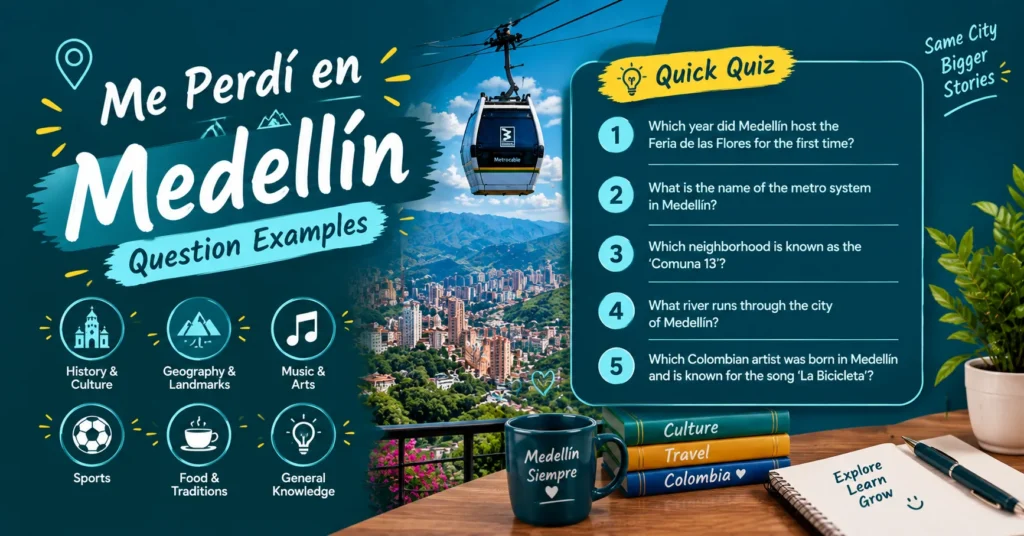
- El libro dice que “lo que más llama la atención de los visitantes no son estos lugares sino su gente” (what attracts visitors most isn’t the places but the people). ¿Estás de acuerdo? ¿Por qué?
- ¿Cómo cambia la percepción de Andrew sobre Medellín del principio al final del libro?
- ¿Qué papel tiene la confianza (trust) entre desconocidos en esta historia?
- Si tú te perdieras en una ciudad nueva, ¿qué harías diferente después de leer esta historia?
Printable Worksheet Ideas for Each Chapter
If you want to turn these questions into a printable, chapter-by-chapter worksheet for independent reading or homework, here’s a simple format that works well for this book specifically:
- Vocabulary match five to seven target words from the chapter, matched to English definitions.
- Two comprehension questions one factual (what happened), one inferential (why it happened).
- One “predict” question what do you think happens next, based on the chapter’s ending.
- One personal-connection question tying the chapter’s theme (trust, hospitality, getting lost) to the student’s own experience.
This structure keeps each worksheet short enough for a single class period while still covering comprehension, vocabulary, and cultural reflection the same three areas the questions above are built around.
Conclusion
Exploring Me Perdí en Medellín through thoughtful questions can make the experience more meaningful, whether you are discussing the story in a classroom, book club, or casual conversation. The right questions encourage readers to look beyond the surface and consider the characters, emotions, relationships, and important themes presented throughout the work. They can also help spark different interpretations and create deeper conversations among readers.
Whether you are looking for simple comprehension questions or more analytical prompts, a balanced set can make discussion easier and more engaging. Take your time with each question, share your perspective openly, and remember that different readers may connect with the story in very different ways.
FAQs
Author

Hi, I’m Alex, and I enjoy learning through quizzes, trivia, and interactive questions. I love discovering new conversation starters, relationship topics, and educational challenges. This website is my go-to place for fun, practical, and reliable question-based content. I’m always excited to learn something new and share it with others.