Trick Questions to Ask a Cheater: 20 That Reveal the Truth
The best trick questions to ask a cheater are open-ended, specific, and repeatable, because evasive answers and shifting details expose lies better than accusations do. If suspicion keeps you awake, you are not paranoid; you are noticing secrecy, inconsistencies, and sudden routine changes. Your gut feeling deserves a calm, structured response.
Infidelity is painful, and clarity is a fair thing to want. We built this guide from therapist-reviewed advice, Gottman Institute research, and University of Denver data so you can confront your partner with dignity. Inside, you will find practical questions, red flags, and ground rules, whether you want answers, closure, or a path toward rebuilding trust.
Trick Questions to Ask a Cheater: How to Catch a Cheater in a Relationship
Trick questions to ask a cheater work best as gentle consistency checks woven into everyday conversation, not courtroom cross-examinations. Ask about specific details, such as who attended dinner or what time you left, then notice whether the story stays stable. Honest partners recall details easily; deceptive ones improvise.
Context matters more than any single answer. A therapist quoted on Marriage.com advises starting with honest, calm communication, because fear can fill in blanks that facts never confirmed. Treat awkward answers as clues to explore, not proof, and give your partner room to explain before you draw conclusions.
Signs of Cheating to Watch For
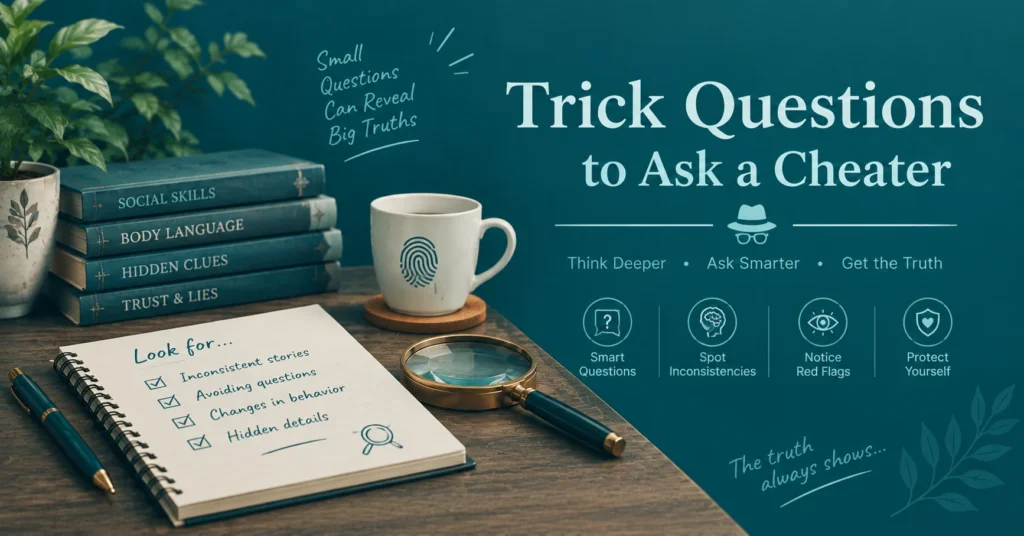
Before asking anything, note patterns: guarded phone habits, stories that do not line up, sudden changes in routine, mood, or appearance, and new secrecy around social media. One red flag means little; several together, especially alongside emotional distance and reduced intimacy, justify a direct, respectful conversation.
Tips for Detecting Lies
Watch for rehearsed alibis, defensive anger, or answers that dodge your actual question. Then revisit the topic days later, casually. If Monday’s dinner ended at nine but Friday’s version has them home by eight, the shifting story matters. Truthful accounts stay steady.
Before You Ask: Preparing Yourself Emotionally for Trick Questions to Ask a Cheater
Preparation protects you more than the questions do. Discovering possible betrayal floods your body with stress hormones, which makes calm listening nearly impossible. Write your questions down, decide what you truly need to know, and lean on a trusted friend or counselor before the conversation starts.
Research in Stress and Health found that 30 to 60 percent of betrayed partners report trauma-level symptoms, including anxiety, depression, and intrusive thoughts. If you feel shaky, that is normal. Treat self-care, sleep, and support as part of your strategy, not a distraction from it.
The Critical Waiting Period
Therapists commonly suggest waiting 48 to 72 hours after discovering evidence before any structured conversation. That pause lets adrenaline settle so you can hear answers instead of reacting to them. Use the time to eat, rest, and write down the three or four things you most need clarified.
Setting the Right Environment and Ground Rules
Choose a private, quiet place without children, interruptions, or phones buzzing. Agree on simple ground rules: no yelling or name-calling, breaks when emotions spike, and a time limit of roughly an hour. Clear boundaries keep the conversation honest rather than explosive.
Trick Questions to Ask a Cheater If You Suspect Your Partner Is Cheating
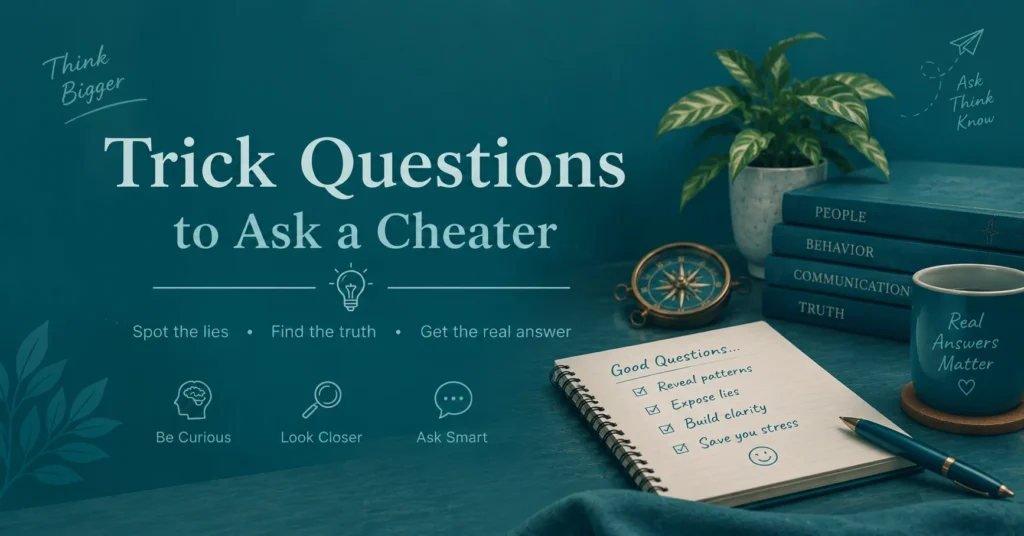
The strongest trick questions to ask a cheater are open-ended and detail-hungry. Instead of asking whether they cheated, ask for the story of last Thursday evening from start to finish. Specifics are hard to fake, and follow-up questions quickly reveal whether a memory is real or rehearsed.
Keep your tone curious, not accusing. Ask one question at a time, listen fully, and resist the urge to correct every detail mid-answer. The table below pairs ten sample questions with what each one helps you notice, so you can judge the response rather than just the words.
| # | Sample question | What it helps you notice |
| 1 | “Walk me through your evening from the moment you left work.” | Timeline consistency |
| 2 | “Who else was there, and what did they order?” | Concrete, checkable detail |
| 3 | “What was the funniest thing that happened today?” | Natural, unrehearsed recall |
| 4 | “Is there anything you’ve been meaning to tell me?” | Willingness to disclose voluntarily |
| 5 | “Have you been feeling distant from me lately?” | Emotional honesty |
| 6 | “I noticed your phone was on silent last night. What’s going on?” | Defensiveness versus openness |
| 7 | “Could we review our shared bills together this weekend?” | Financial transparency |
| 8 | “Can you tell me that story again? I want to understand it fully.” | Stability of the account |
| 9 | “What would you say to a friend who was hiding something like this?” | Values and discomfort |
| 10 | “What do you think is happening between us right now?” | Self-awareness and candor |
How to Confront a Cheater With Confidence Using Trick Questions to Ask a Cheater
Confidence is calm, not cold. Lead with what you have observed, such as late nights and unexplained charges, then ask your question and stop talking. Silence is powerful. People who are hiding something often fill it with excuses, new details, or sudden anger that tells you more than a denial.
The same therapist advises that the goal is understanding the truth, not trapping your partner. That mindset matters. A curious, steady approach invites a more respectful and revealing exchange, while a gotcha attitude pushes people into defensiveness, gaslighting, or total shutdown.
How Do You Confront a Cheater Without Proof?
Without proof, describe your feelings and the specific changes you have noticed rather than making accusations. Say, “I have felt distance between us, and I need honesty.” Then ask open-ended questions. You are seeking clarity, and a calm approach protects you if your suspicion turns out to be wrong.
Trick Questions to Ask a Cheater: Initial Discovery Questions
Discovery questions establish facts before feelings enter the room. Ask how long this has been going on, how it started, and who else knows. Press gently for specifics, because vague answers like “a while” leave room for what experts call trickle truth, where details leak out in painful doses.
Keep a notebook. Honest answers stay stable from one conversation to the next, while shifting timelines are a warning sign. According to 2022 General Social Survey figures, roughly 20 percent of married men and 13 percent of married women report outside sexual relationships, so your concern is not unusual.
Establishing the Timeline and Scope
A clear timeline reframes memories that suddenly look different. Ask when contact started, how often it happened, and whether it is truly over. Specific dates help you decide next steps, while evasive replies suggest the full truth has not arrived and your questions are not finished.
Trick Questions to Ask a Cheater: Emotional Impact and Understanding Questions
Once facts are on the table, probe the emotional side. Ask how your partner justified the affair to themselves and whether they were chasing something the relationship lacked. Rationalizations like “it meant nothing” reveal moral reasoning, empathy, and how much cognitive dissonance they were managing.
Then test empathy by asking what they imagine you have felt since the truth surfaced. A thoughtful answer names betrayal, self-doubt, and lost safety. A thin “I know you’re upset” suggests they are still protecting themselves. Remember, questions about unmet needs explain choices; they never excuse infidelity.
Probing the Emotional Landscape
Listen for ownership. People ready to rebuild trust use “I chose” language, while others lean on “it just happened” or shift blame to you. Notice whether your partner can sit with your pain without deflecting, minimizing, or changing the subject too quickly.
Trick Questions to Ask a Cheater: Questions to Ask After Infidelity
Some questions matter most after the truth is out. They help you understand what happened and judge whether repair is realistic. Ask them slowly, ideally three to five per sitting, because overwhelming conversations lower answer quality and leave you exhausted instead of informed.
Trust recovery is slow. Therapists often cite roughly 18 months to three years of consistent effort, longer after long affairs. Couples who work with a trained counselor tend to fare better, so view these conversations as the start of a process, not a single dramatic showdown.
What Was the Turning Point That Led You to Cheat?
This question looks for the moment a boundary gave way. Was it a weak night, a slow drift, or a deliberate plan? The answer reveals patterns, the role of secrecy and deception, and whether your partner can describe their choices honestly instead of calling them an accident.
Why Didn’t You End Our Relationship Before Starting Another?
This asks why they chose deception over honesty. Possible answers include fear of conflict, wanting both lives, or avoiding consequences. None is a justification, but each shows how they weigh commitment and honesty. Pay attention to whether they take responsibility or build another excuse.
Trick Questions to Ask a Cheater: Assessing Genuine Remorse
Remorse shows up as accountability without excuses. A partner who is truly sorry answers uncomfortable questions, offers transparency, and accepts that the affair was a series of choices, not one slip. Defensiveness, blame-shifting, or irritation at your questions usually signals discomfort with consequences rather than regret.
Ask what they are willing to do to rebuild trust. Meaningful answers include therapy, open access to devices, ending contact with the affair partner, and patience. Vague promises, or resistance to specific steps, suggest the goal is avoiding fallout rather than repairing the relationship.
Distinguishing True Remorse from Regret About Getting Caught
Regret about getting caught centers on their discomfort: lost status, angry family, awkward fallout. True remorse centers on you. Notice whether tears come with accountability, whether they volunteer information without prompting, and whether their actions match their words over weeks, not just the first emotional night.
Trick Questions to Ask a Cheater: Questions You Should Avoid Asking
Some questions harm you more than they help. Avoid demanding graphic sexual details, because vivid images can linger and intensify trauma symptoms. The Gottman approach steers betrayed partners toward timelines, emotions, and scope of deception, information that supports decisions rather than creating intrusive mental movies.
Skip comparison questions like “Am I better than them?” and anything designed to humiliate. Do not repeat one question hoping for a different answer, either. Trick questions to ask a cheater should clarify the truth, not punish; once they become interrogation, honest conversation shuts down.
| Instead of this | Ask this |
| “Am I better than them?” | “What was missing for you that you didn’t bring to me?” |
| “Give me every detail.” | “How long did it last, and is it truly over?” |
| “Admit it, you’re cheating!” | “Is there anything you haven’t told me?” |
| Repeating one question louder | “Help me understand the part that doesn’t add up.” |
Trick Questions to Ask a Cheater: When to Seek Professional Help
Get support if suspicion consumes your sleep, work, or parenting, or if the conversation turns threatening. A licensed therapist can slow things down, translate evasive answers, and keep both of you safe. Gottman Trust Revival and Emotionally Focused Therapy are two evidence-based approaches many couples explore after infidelity.
If you ever feel unsafe, or have thoughts of harming yourself, contact emergency services or call or text 988, the Suicide and Crisis Lifeline in the United States. Betrayal hurts deeply, but you do not have to carry it alone, and support is available today.
Be Cautious, Be Confident With Trick Questions to Ask a Cheater
Trick questions to ask a cheater can sharpen your instincts, but they cannot replace honest dialogue or proof. Awkward answers show nervousness, which also appears in innocent people. Gather patterns over time, stay curious, and avoid ultimatums built on one shaky reaction or a single inconsistent detail.
Whatever you learn, your next step is yours. Research from the University of Denver found that people who cheated were about three times likelier to cheat again, yet most did not repeat it, so history is a risk factor, not destiny. Choose the path that protects your wellbeing.
Conclusion
Trick questions to ask a cheater can help you start an honest conversation, clarify confusing situations, and better understand your partner’s behavior. While carefully chosen questions may reveal inconsistencies, no single answer can prove that someone has been unfaithful. Pay attention to patterns, listen calmly, and give yourself time to process what you hear. If you suspect cheating, remember that your feelings and peace of mind matter just as much as finding the truth.
Avoid jumping to conclusions or turning the conversation into an argument. Ultimately, trust is built through honesty, respect, and consistent actions, and you deserve a relationship where you feel valued and secure.
FAQs
Author

Hi, I’m Alex, and I enjoy learning through quizzes, trivia, and interactive questions. I love discovering new conversation starters, relationship topics, and educational challenges. This website is my go-to place for fun, practical, and reliable question-based content. I’m always excited to learn something new and share it with others.