

100 Therapy Questions for Teens That Build Trust Fast
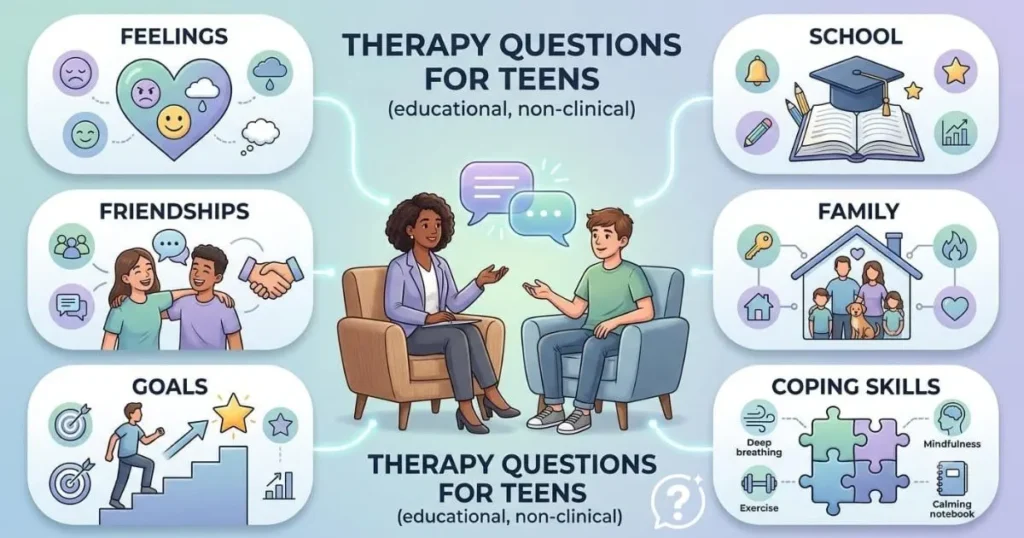
Therapy questions for teens are open-ended prompts designed to help adolescents reflect on their emotions, relationships, and sense of identity without feeling interrogated. Talking to a teenager about their inner world isn’t always easy for parents, and even for trained therapists. Teens are navigating identity, independence, peer pressure, and big emotional shifts all at once, and a poorly timed or overly clinical question can shut the conversation down before it even starts. Good therapy questions for teens aren’t about interrogation. They’re about creating enough safety and curiosity that a teenager actually wants to open up.
Whether you’re a therapist building an intake process, a parent trying to understand what’s going on with your teenager, or a family working through a rough patch together, the right questions can turn a guarded “I don’t know” into a real conversation. This guide walks through 100 practical, age-appropriate questions across therapy settings, family conversations, and everyday check-ins.
Why Asking Teens the Right Questions Matters
Adolescence is a period of rapid change socially, emotionally, cognitively, and physically. Teens are often more self-conscious than younger children but less equipped than adults to articulate what they’re feeling. This creates a communication gap: they may feel a lot, but struggle to name or explain it, especially to an authority figure like a parent or therapist.
This is why the way a question is framed matters as much as the content. A question like “What’s wrong with you?” invites defensiveness. A question like “What’s been the hardest part of your week?” invites reflection. Effective questions for teenagers tend to share a few traits:
- They’re open-ended rather than yes-or-no.
- They avoid judgment or an implied “right” answer.
- They give the teen room to say “I don’t know” without it feeling like a dead end.
- They show genuine curiosity rather than an agenda.
According to the American Academy of Child & Adolescent Psychiatry, open-ended, low-pressure communication is one of the strongest predictors of whether a teen will disclose emotional struggles to a trusted adult before a crisis point.
1. Therapy Intake Questions for Teens (20 Questions)
Intake sessions set the tone for the entire therapeutic relationship, so it’s worth being thoughtful about how questions are framed. Below are commonly used categories and example questions therapists use during intake with adolescent clients.
Building Initial Rapport
- What do you like to do when you’re not at school?
- If you could describe yourself in three words, what would they be?
- What’s something people often get wrong about you?
- Is there anything you’re really into right now music, shows, games, sports?
- Who’s someone in your life who makes you feel comfortable being yourself?
Understanding the Presenting Concern
- What’s been going on that made you (or your family) decide to come here?
- On a scale of one to ten, how would you rate how things have been lately?
- When did you first start noticing things felt different or harder?
- What does a hard day usually look like for you?
- If things got better, what’s the first thing you think you’d notice?
Exploring Home and Family Life
- Who do you live with, and how would you describe your relationship with each person?
- Is there anyone in your family you feel like you can talk to about anything?
- How do things usually get resolved when there’s conflict at home?
- What’s something about your family you wish was different?
- What’s a rule at home that feels hardest to live with right now?
Exploring School and Social Life
- How are things going at school, academically and socially?
- Do you feel like you have people you can rely on there?
- Has anything changed recently with your friend group?
- Is there anything about school that feels stressful or overwhelming right now?
- If you could change one thing about your school day, what would it be?
Therapists should always follow professional and ethical guidelines for risk assessment (including questions about self-harm or safety) as part of a formal intake general question lists like this one are meant as a starting framework, not a replacement for clinical training or a structured intake protocol.
2. Assessing Emotional and Mental Health (10 Questions)
- How would you describe your mood most days?
- Do you ever feel like your emotions are bigger than you know how to handle?
- What do you usually do when you’re upset or overwhelmed?
- Is there anything you’ve been thinking about that scares you or worries you?
- When you feel a strong emotion, where do you notice it in your body?
- Is there a difference between how you feel and how you show it to other people?
- What’s the last thing that made you really happy, even briefly?
- Do you feel like your feelings make sense to you, or confusing most of the time?
- Is there an emotion you wish you didn’t feel as often?
- What helps you feel calmer when things feel like too much?
3. Family Therapy Questions for Teens (8 Questions)
Family therapy sessions involve a different dynamic the teen isn’t just reflecting individually, but navigating how they relate to parents or siblings in the room. Good family therapy questions help surface patterns without making anyone feel singled out or blamed.
- What’s one thing you wish your family understood about you?
- When do you feel most heard at home, and when do you feel least heard?
- If you could change one thing about how your family communicates, what would it be?
- What’s a recent moment when you felt really supported by your family?
- What’s something your family does well, even during hard times?
- How do you usually know when a parent or sibling is upset, even if they don’t say it directly?
- What would it look like if things got better between you and [specific family member]?
- Is there something you’ve wanted to say to your family but haven’t found the moment for?
The goal in a family session is to help each person feel like their perspective matters, so questions are often mirrored across family members rather than aimed only at the teen asking parents similar questions helps balance the conversation and models the same openness being asked of the teenager.
4. Questions to Ask Teens About Life (8 Questions)
Outside of a clinical setting, both parents and mentors benefit from questions that spark honest reflection about a teenager’s broader life, values, and sense of self:
- What does a good day look like for you right now?
- What’s something you’re proud of that maybe nobody else knows about?
- Who’s someone you look up to, and what is it about them that you admire?
- If you didn’t have to worry about grades or what anyone else thought, what would you want to spend your time doing?
- What’s something you’ve changed your mind about recently?
- What’s a worry you carry that you don’t talk about much?
- What do you think people misunderstand about being your age right now?
- What’s something you need from the people around you that you don’t always ask for?
These kinds of open, reflective questions work well as regular check-ins — not just during a crisis or a scheduled conversation, but as an ongoing habit that keeps communication open.
5. Everyday Questions to Ask Teenagers (For Parents) (6 Questions)
Parents often default to “How was school?” or “How was your day?” questions that are easy to answer with a flat “fine” and move on. Slightly more specific, lower-pressure questions tend to open things up more naturally:
- What was the best part of your day, even if it was small?
- Did anything annoying or frustrating happen today?
- Who did you spend the most time with today?
- Is there anything on your mind that you’ve been chewing on?
- What’s something you’re looking forward to this week?
- Is there anything I could do differently that would make things easier for you?
Timing matters as much as wording. Teens are often more willing to talk during a shared activity driving somewhere, cooking, walking the dog than in a face-to-face “we need to talk” conversation, which can feel like an interrogation regardless of how gently it’s framed.
6. Anxiety and Stress Questions (8 Questions)
- What does anxious feel like in your body when it shows up?
- Is there a specific thing that’s been on your mind lately, or more of a general feeling?
- What’s something that used to worry you that doesn’t anymore?
- When you feel stressed, do you tend to talk about it or keep it to yourself?
- What’s a small thing that helps take the edge off when you’re anxious?
- Do you ever feel like you have to be “fine” even when you’re not?
- What’s the difference between being nervous about something and dreading it?
- Is there a situation you’ve been avoiding because of how it makes you feel?
7. Self-Esteem and Identity Questions (8 Questions)
- What’s something about yourself you’re still figuring out?
- Is there a version of yourself you feel like you show at school versus at home?
- What’s something you like about yourself that you don’t say out loud very often?
- Who do you feel most like yourself around?
- What’s something you’ve been told about yourself that didn’t feel true?
- If a friend described you to someone who’d never met you, what would you want them to say?
- What’s something you’re still learning to accept about yourself?
- Is there a label or expectation that feels like it doesn’t fit you anymore?
8. Social Media and Technology Questions (8 Questions)
- How do you feel after scrolling through social media most days?
- Is there an account or type of content that makes you feel worse about yourself?
- Do you feel pressure to look or act a certain way online?
- What’s something good that’s come from being connected to friends online?
- Have you ever felt left out because of something you saw online?
- Is there a difference between who you are online and who you are in person?
- What would it feel like to take a break from your phone for a day?
- Has anything you’ve seen online ever made you worry about someone you know?
9. Grief and Loss Questions (6 Questions)
- Is there something or someone you’ve lost that you still think about?
- What’s a memory that makes you feel close to that person, even now?
- Do you feel like you have space to talk about this loss, or does it feel like something to keep quiet?
- What’s something that’s helped, even a little, since this happened?
- Is there anything you wish people understood about how you’re grieving?
- What does support look like for you right now?
10. Anger and Frustration Questions (8 Questions)
- What’s something that’s made you really angry recently?
- When you feel anger building, what does it usually feel like right before it comes out?
- Is there a difference between feeling angry and knowing what to do with it?
- What’s something that helps you cool down once you’re upset?
- Do you ever feel angry about something you can’t really talk about?
- Is there a situation where you wish you’d reacted differently?
- What do you wish people did when you’re angry, instead of what they usually do?
- Is there frustration underneath the anger like feeling unheard or stuck?
11. Life Transitions Questions (8 Questions)
For teens navigating a move, a new school, a parents’ divorce, or another major change:
- What’s felt like the hardest part of this change so far?
- Is there anything about the old situation you miss, even if the change is a good one?
- What’s something that’s helped you adjust, even a little?
- Who’s been the most steady, supportive person through this transition?
- What’s something you’re nervous about that hasn’t happened yet?
- Is there a part of this change you’re actually looking forward to?
- What would make this transition feel more manageable?
- Is there something about your old routine you’d like to keep, even in the new situation?
12. Coping and Resilience Questions (6 Questions)
- What’s something hard you’ve gotten through before, and how did you do it?
- Who do you turn to first when things feel like too much?
- What’s a coping strategy that’s actually worked for you, versus one people just suggest?
- Is there a difference between pushing through something and actually dealing with it?
- What would you tell a friend going through what you’re going through?
- What’s one small thing that makes hard days a little easier?
13. Future and Goals Questions (6 Questions)
- What’s something you’re excited about for your future, even if it’s small?
- Is there a goal you have that you haven’t told many people about?
- What’s something you’re worried might get in the way of what you want?
- If you picture yourself five years from now, what feels most important to have in that picture?
- What’s something you’d like to try that you haven’t yet?
- Is there a fear about the future that would help to say out loud?
Building Emotional Intimacy and Trust With a Teenager
A few underlying principles make these kinds of questions actually land, whether they’re coming from a therapist or a parent:
Active listening matters more than the perfect question. A teen is far more likely to open up if they sense the person asking is actually listening not just waiting for a chance to lecture or problem-solve. Reflecting back what they’ve said (“It sounds like that really frustrated you”) often does more to build trust than the next question in line.
Vulnerability tends to be reciprocal. Just like in adult relationships, teens often open up more when the adult in the conversation is willing to share something real too an appropriate story about their own teenage years, a moment of uncertainty, or an honest “I don’t always know the right thing to say either.”
Silence isn’t failure. If a teen answers with “I don’t know” or goes quiet, that’s not necessarily a dead end. Giving space rather than immediately filling the silence with another question often allows them to eventually say more.
Consistency builds emotional safety. A single good conversation doesn’t undo months of feeling unheard. These questions work best as part of an ongoing pattern of communication, not a one-time fix.
When to Involve a Professional
While thoughtful conversation at home goes a long way, some signs suggest a licensed therapist or counselor should be involved: persistent low mood, dramatic changes in behavior or sleep, withdrawal from friends and activities they used to enjoy, or any mention of self-harm or hopelessness. Family conversations and professional therapy aren’t competing approaches; they work best together, with home conversations reinforcing the trust and communication skills a teen also builds in therapy.
If you’re ever concerned about a teen’s immediate safety, contact the 988 Suicide & Crisis Lifeline (call or text 988 in the US) or seek emergency care.
Conclusion
Whether you’re a therapist conducting an intake, a family working through therapy together, or a parent just trying to stay connected with your teenager, the questions themselves are only part of the equation. What matters most is the environment around them genuine curiosity, patience with silence, and a willingness to listen without immediately correcting or advising. Teens are often more perceptive than they get credit for, and they tend to know the difference between a question asked to check a box and one asked because someone actually wants to understand them.
Note: This article is intended as general, educational information for parents, families, and professionals, and is not a substitute for individualized clinical guidance. If you’re concerned about a teenager’s mental health or safety, please consult a licensed mental health professional.
FAQs
Author

Hi, I’m Alex, and I enjoy learning through quizzes, trivia, and interactive questions. I love discovering new conversation starters, relationship topics, and educational challenges. This website is my go-to place for fun, practical, and reliable question-based content. I’m always excited to learn something new and share it with others.




4 Comments