

Pet Health Questions Dogs Owners Ask Their Vet Most Often
Most pet health questions dogs owners struggle with come down to one thing: not knowing what’s actually worth worrying about. I’ve sat in enough waiting rooms with a nervous dog and a mental list of half-formed worries to know the feeling you rehearse what to say, then forget half of it the second the vet walks in. Between vaccination schedules, dental health, weight, and behavior, it’s easy to leave an appointment without the answers you came for.
This guide pulls together the pet health questions dogs owners ask most, based on what veterinarians actually get asked in exam rooms, so you can walk in prepared instead of guessing. We’ll cover preparation, vaccines, teeth, weight, parasite prevention, heart health, behavior, and cost the same ground a thorough annual exam covers, broken into plain language you can use before, during, and after your next visit.
Preparation
Before you can get useful answers, you need to walk in ready. Call ahead for an appointment rather than a walk-in, and tell the receptionist about specific concerns at check-in so your veterinarian has a heads-up. Ask whether they’ll need a stool or urine sample, and keep your dog leashed or crated on arrival.
A little preparation turns a rushed visit into a productive one. Jot down any behavior changes, appetite shifts, or symptoms you’ve noticed over the past few weeks vets rely on this history as much as the physical exam itself. Bring prior vaccination records if you’re seeing a new veterinarian or working with a rescue dog.
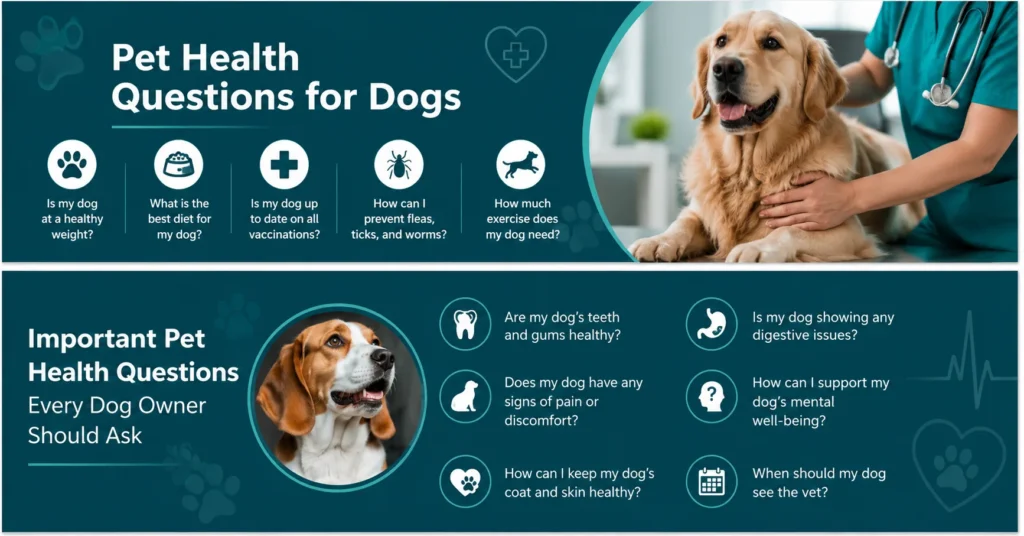
Why Is Regular Veterinary Care Important for My Pet?
Regular veterinary care lets your vet catch developing health problems while they’re still easy and cheap to treat. Dogs are experts at hiding pain, so silent issues like early kidney disease or dental problems can progress for months before you’d notice anything at home. Routine visits close that gap.
Preventive care also builds a baseline. Once your vet has a few years of bloodwork, weight, and exam notes on file, they can spot subtle changes fast. Skipping checkups because your dog “seems fine” is one of the most common ways owners unknowingly delay treatment.
How Often Should I Bring My Pet to the Vet?
Vet visit frequency depends on your dog’s life stage: puppies need visits every three to four weeks until their vaccination series wraps up around 16 weeks old, while healthy adults typically do well with one annual wellness exam. Senior dogs, generally seven and up, benefit from twice-yearly visits.
Dogs with chronic conditions, ongoing medications, or breed-specific risks may need more frequent monitoring regardless of age. When in doubt about scheduling, ask your vet directly they’ll tailor a plan around your dog’s health history rather than a generic calendar.
What Should I Expect During a Routine Vet Visit?
A routine exam starts with a nose-to-tail physical: your vet checks for lumps, hair loss, rashes, and parasites, then examines ears, eyes, and teeth for discharge, redness, or odor. Vaccination status gets reviewed and updated as needed during the same visit.
Your veterinarian will also confirm you have enough preventive medications flea, tick, and heartworm products to last until the next appointment. A stool sample is often requested too, since it screens for intestinal parasites that don’t always show obvious symptoms at home.
Does My Dog Have All Their Vaccinations?
Keeping vaccinations current is one of the most common pet health questions dogs owners raise, especially after adopting a rescue with incomplete records. Core vaccines protect against diseases like rabies, distemper, and parvovirus, and puppies typically need a series of boosters every three to four weeks.
If you’re unsure what your pet health questions dogs has received, your vet can run a titer test or simply restart an appropriate schedule. Don’t guess under-vaccinating leaves real gaps, while unnecessary re-vaccination is easy to avoid with a quick records check at your next visit.
How Do Their Teeth Look?
Dental disease is one of the most common and most preventable conditions in adult pet health questions dogs, often starting with tartar buildup and gum inflammation most owners never notice. Daily brushing at home helps, but most dogs still need a professional dental cleaning under anesthesia periodically to properly clean below the gumline.
Watch for bad breath, yellowing teeth, or reluctance to chew, since these often signal it’s time for a cleaning rather than just a home-care adjustment. Left untreated, dental disease can affect the heart and kidneys, not just the mouth.
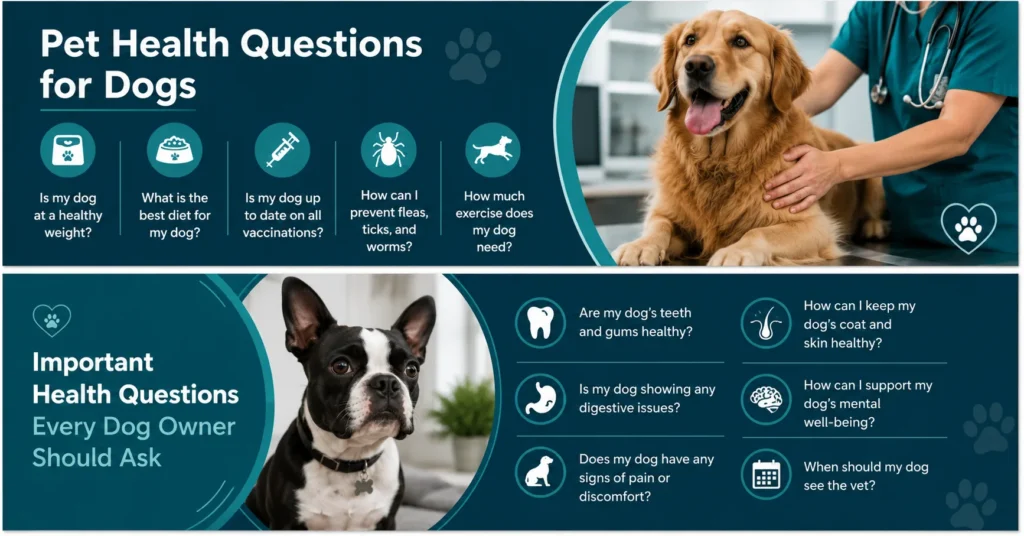
Are They at a Healthy Weight?
A healthy weight varies enormously by breed, so there’s no single number that applies across the board. Extra pounds put real strain on joints and organs, raising the risk of arthritis, hip dysplasia, and heart disease conditions that are far easier to prevent than reverse.
If your vet flags your pet health questions dogs as overweight, ask for a specific target weight and a realistic feeding and exercise plan rather than vague advice to “cut back.” Small, measurable changes an exact cup measurement, a shorter list of treats tend to work better than general intentions.
What Kind of Flea, Tick, and Heartworm Medicine Should I Use?
Even indoor pet health questions dogs face flea, tick, and heartworm risk, so year-round prevention matters regardless of lifestyle. Options include monthly oral chews, topical treatments, and collars, with heartworm prevention typically dosed monthly as a chewable or injectable.
The right choice depends on where you live, your dog’s health history, and your budget, so this is worth discussing directly rather than picking based on packaging alone. Oral prescription combinations are increasingly common because they cover fleas, ticks, and heartworm in a single monthly dose.
What Are the Recommendations for Keeping Your Pet’s Heart Healthy?
Heart health comes down to consistent exercise and a properly balanced diet nothing exotic. A daily 15-to-20-minute walk plus food that meets AAFCO nutritional standards covers most of what a healthy adult dog needs for cardiovascular support.
Diet quality matters as much as quantity: your dog’s food should supply the right balance of protein, fats, and carbohydrates for their specific life stage. Puppies, adults, and seniors have meaningfully different nutritional needs, so a one-size-fits-all bag of food isn’t always the safest default.
Can CBD Oil Help With Pain and Illness?
CBD oil for pets remains an open question in veterinary medicine it’s popular with owners, but robust clinical studies on effectiveness in dogs are still limited. Vets generally recommend caution rather than either full endorsement or dismissal.
If you’re considering CBD for anxiety or chronic pain, talk to your vet first rather than relying on product marketing alone. They can flag interactions with existing medications and point you toward whatever current research does exist for your dog’s specific condition.
How Can You Conquer Separation Anxiety in Dogs?
Separation anxiety shows up as destructive chewing, excessive barking, or house-soiling specifically when a dog is left alone and it’s genuinely one of the harder behavior issues to resolve. Most vets recommend a combination of behavior modification techniques alongside supplements or prescription medication when needed.
Consistency matters more than any single trick here. Working with a certified trainer or veterinary behaviorist alongside your vet tends to produce better results than behavior changes attempted in isolation, and progress is usually gradual rather than immediate.
How Much Will This Cost?
Veterinary costs vary widely by region, clinic, and the specific tests or treatments involved, so it’s worth asking for an estimate before agreeing to anything beyond a basic exam. Routine annual visits are generally predictable; diagnostics like bloodwork or imaging add cost on top.
Don’t hesitate to ask what a fee actually covers and why it’s necessary a transparent vet will walk you through it without hesitation. Many clinics also offer wellness plans that spread preventive care costs across the year rather than one large annual bill.
Conclusion
Caring for a dog involves more than providing food, exercise, and plenty of love. Asking the right pet health questions dogs owners commonly have can help you understand your pet’s needs, spot changes early, and know when it is time to contact a veterinarian. From vaccinations and nutrition to behavior and routine checkups, staying informed makes pet care easier and more confident.
Every dog is different, so concerns should always be considered based on your dog’s age, lifestyle, and overall health. Keeping regular veterinary appointments and paying attention to everyday changes can go a long way. With the right knowledge and consistent care, you can help your dog stay comfortable, active, and happy for years to come.
FAQs
Author

Hi, I’m Alex, and I enjoy learning through quizzes, trivia, and interactive questions. I love discovering new conversation starters, relationship topics, and educational challenges. This website is my go-to place for fun, practical, and reliable question-based content. I’m always excited to learn something new and share it with others.






One Comment