New Grad Nurse Interview Questions & How to Answer Them
New grad nurse interview questions almost always test the same three things: can you think clearly under pressure, can you work with a team, and can you own a mistake. I’ve sat across from enough nervous, brilliant new RNs to know the fear is rarely about competence it’s about not knowing what’s coming.
That’s exactly what this guide fixes. Below you’ll find the real new grad nurse interview questions hiring managers ask, sample answers you can adapt, the STAR method for behavioral questions, and a prep checklist so you walk in ready instead of guessing.
What to Expect as a New Grad Nurse in Your First Interview
Nursing interviews for new grads look different than interviews for experienced RNs. Hiring managers already know your clinical hours are limited, so they’re not grading you against a veteran nurse. Instead, they’re watching how you think, communicate, and handle the unknown traits that predict success far better than raw experience does.
Expect a blend of behavioral questions, a few technical or clinical-judgment scenarios, and soft-skill checks about teamwork and adaptability. Nurse managers want to see if your values match their unit’s culture just as much as they want to confirm you passed your boards. Preparation, more than perfection, is what separates a strong candidate from an anxious one.
Top Common Interview Questions for New Grad Nurses
Here are the specific new grad nurse interview questions that show up again and again across hiring managers, nursing schools, and healthcare employers with guidance on what each one is really testing.
Tell Me About Yourself
This opener sets the tone for the whole interview. Skip a chronological resume recap and instead give a short narrative: your nursing school focus, a clinical experience that shaped you, and why you’re excited about this specific role. Keep it under 90 seconds and professional.
Why Did You Choose Nursing as a Career?
Interviewers want authenticity here, not a rehearsed line. Share a genuine moment a family member’s hospital stay, a volunteer shift, a clinical rotation that solidified your decision. Passion paired with a concrete story is far more memorable than generic statements about “helping people.”
What Are Your Strengths and Weaknesses?
Choose a strength directly relevant to bedside care, like attention to detail or calm communication, and back it with a clinical example. For your weakness, pick something real but not disqualifying, and pair it with the specific step you’re taking to improve it.
How Do You Handle Stressful Situations?
Nursing is inherently high-pressure, so employers need proof you won’t freeze. Describe a specific fast-paced clinical moment a busy ER shift or an unexpected code and explain the concrete actions you took: prioritizing, staying organized, and asking for help when needed.
Why Do You Want to Work for This Organization?
This question separates prepared candidates from those applying anywhere. Research the facility’s mission, specialty units, residency program, or patient outcomes beforehand, then connect those specifics to your own career goals. Vague answers about “a good hospital” signal you didn’t do your homework.
How Do You Deal with Conflict?
Nursing requires constant communication across patients, families, and interdisciplinary teams, so conflict is inevitable. Describe your approach active listening, staying calm, clarifying the real issue and share a brief clinical or academic example that ends in a respectful resolution.
Tell Me About a Time You Made a Mistake and How You Handled It
Every nurse makes mistakes; what matters is what happens next. Choose a minor, honest example from clinicals, explain how you caught and corrected it, and end with the specific lesson or safety habit you built afterward. Owning it builds more trust than pretending it never happened.
Can You Give an Example of a Time You Worked on a Team?
Patient outcomes depend on teamwork between nurses, physicians, and support staff. Pick a clinical rotation example where clear communication and shared effort led to a positive result, and highlight your specific contribution rather than describing the team in general terms.
How Do You Prioritize Patient Care When You Have Multiple Patients?
This question checks your clinical judgment under real workload pressure. Reference a prioritization framework like the ABCs Airway, Breathing, Circulation or explain how you assess acuity to decide which tasks, like medication administration or documentation, come first.
How Do You Handle Difficult Patients or Families?
Interviewers want reassurance you can stay professional when emotions run high. Explain that you listen without interrupting, validate concerns, and loop in resources like social workers or charge nurses when a situation needs extra support beyond what you can offer alone.
What Would Your Instructors or Preceptors Say About You?
This is a chance to showcase feedback you’ve already earned. Reference specific traits dependable, quick learner, calm under pressure that a preceptor or clinical instructor has actually told you, and tie each one to a concrete example from your rotations.
How Did You Prepare for Your NCLEX, and What Did You Learn From the Process?
Employers ask this to gauge discipline and study habits that translate directly to work ethic. Share the strategies that worked for you practice questions, study groups, spaced repetition and connect that persistence to how you’ll approach ongoing clinical learning.
Describe a Challenging Situation During Clinicals and How You Handled It
Use the STAR method here to keep your answer structured: set the Situation, explain the Task, describe your Action, and finish with the Result. A clear, specific clinical story beats a vague generalization every time.
Where Do You See Yourself in Five Years?
Employers want evidence you’re thinking long-term about the profession. Share realistic goals developing expertise in a specialty, pursuing a certification, or eventually returning for an advanced degree while staying open about how your path might evolve.
Why Should We Hire You?
As a new grad, you likely can’t compete on years of experience, but you can highlight fresh clinical knowledge, strong training, humility, and eagerness to learn. Emphasize reliability and a genuine willingness to grow within the team.
What Are Your Salary Requirements?
Most facilities have a set pay scale for new graduates, so it’s fine to say you’re open to discussing compensation within their established range. Researching the general new-grad pay range in your region beforehand will help you answer with confidence.
How Do You Stay Current with Nursing Practices and Continuing Education?
Even as a new grad, you can mention nursing journals, webinars, or certifications you’re planning to pursue in areas like wound care or critical care. This shows commitment to lifelong learning, which matters in a field where best practices constantly evolve.
How Do You Handle Feedback or Criticism?
Employers want to see coachability. Share a specific time a preceptor gave you constructive feedback on time management or documentation, for example and describe exactly how you applied it to improve your performance afterward.
Do You Have Any Questions for Us?
Always say yes. Asking thoughtful questions shows genuine interest and helps you evaluate whether the unit is the right fit for you, too interviews are a two-way conversation, not an interrogation.
How to Use the STAR Method in Interviews
The STAR method Situation, Task, Action, Result gives structure to any behavioral question so your answer stays clear and compelling instead of rambling. Start by setting the scene, explain what you needed to accomplish, walk through the specific steps you took, and close with the outcome or lesson learned.
For example, if asked about a difficult patient, you might describe a patient who’d just received a hard diagnosis (Situation), your responsibility to provide emotional support (Task), how you listened and engaged their family (Action), and how the patient became more receptive to care by the end of the shift (Result). Practicing two or three STAR stories in advance covers most behavioral questions you’ll face.
Questions You Should Ask the Interviewer
Interviews are a two-way street, and thoughtful questions prove you’re evaluating the fit just as carefully as they’re evaluating you. Consider asking about the orientation and training program for new grads, how the team handles stressful shifts, and what professional growth opportunities the unit supports.
You might also ask what the interviewer’s favorite part of working there is it’s a low-pressure question that often reveals genuine insight into unit culture. These questions demonstrate curiosity about the role while giving you real information to decide if the job is right for you.
Additional Questions for New Graduate RNs
Beyond the core list, be ready for a few additional variations employers commonly ask new graduates. These include: “Describe a time you made a mistake what did you learn from it?”, “How do you stay organized during a busy shift?”, “Tell me about a patient who challenged you,” and “How do you manage stress and prevent burnout?”
These extra questions dig into your resilience and long-term commitment to the profession rather than testing new information. Preparing brief, honest answers for each ensures you’re never caught completely off guard, even if the exact wording differs from what you rehearsed.
Interview Prep Checklist
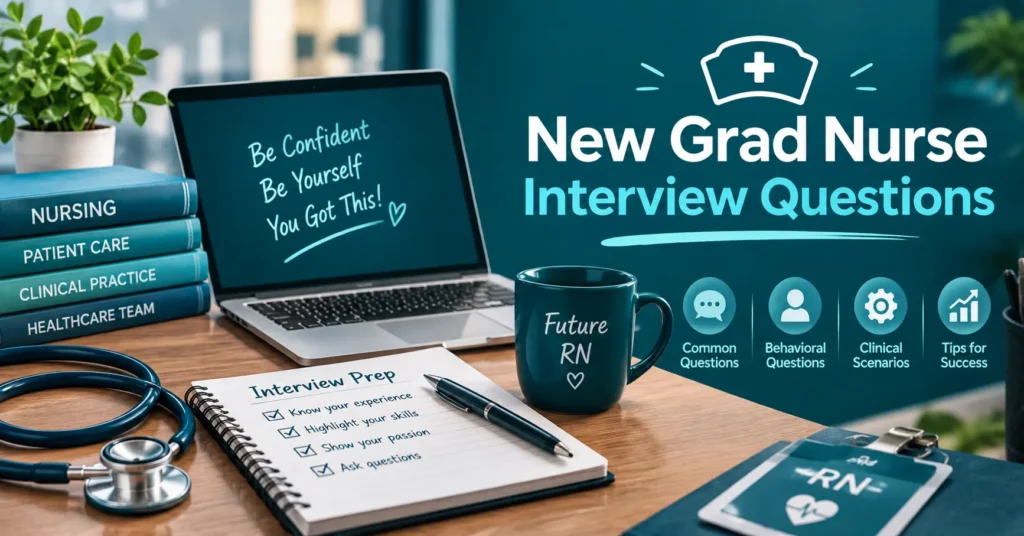
Don’t leave your preparation to the night before. Research the facility’s mission, values, and specialty units so your answers can reference specifics. Practice your responses using the STAR method, and rehearse your “tell me about yourself” introduction until it feels natural rather than memorized.
On the practical side, plan professional, comfortable attire and bring copies of your resume, licenses, and certifications along with a notepad. Finally, send a thank-you email within 24 hours of the interview a small step that reinforces the professionalism you demonstrated in the room.
Preparing for Success as a New Grad Nurse
Your first nursing interview doesn’t need to feel like an obstacle. With the right preparation, you can walk in ready to show self-awareness, compassion, and a genuine commitment to safe patient care the qualities every hiring manager is really screening for.
Practice your answers, reflect on real clinical experiences, and remember that interviewers aren’t expecting a flawless veteran nurse. They’re looking for a thoughtful, teachable new grad who’s ready to learn, grow, and become a valuable part of their team from day one.
Conclusion
Preparing for new grad nurse interview questions is about more than memorizing perfect answers. It is an opportunity to show your clinical knowledge, communication skills, willingness to learn, and genuine commitment to patient care. Take time to review common questions, practice explaining your experiences clearly, and think about situations that demonstrate teamwork, compassion, accountability, and sound judgment.
Remember that interviewers do not expect a new graduate to know everything. They want to see someone who is prepared, honest, adaptable, and ready to grow into the nursing role. With thoughtful preparation and confidence in what you have learned, you can walk into your interview feeling more comfortable and ready to make a strong first impression.
FAQs
Author

Hi, I’m Alex, and I enjoy learning through quizzes, trivia, and interactive questions. I love discovering new conversation starters, relationship topics, and educational challenges. This website is my go-to place for fun, practical, and reliable question-based content. I’m always excited to learn something new and share it with others.