25+ Best Eagle Scout Board of Review Questions to Expect
An Eagle Board of Review can feel different from every other step in the Scouting journey. You may have completed your service project, earned your merit badges, held leadership positions, and worked hard toward Eagle Scout, yet sitting across from a board and answering questions about your experience can still make you nervous.
The good news is that you usually aren’t expected to deliver perfect, rehearsed answers. The board wants to understand who you are, what you have learned, how Scouting has influenced you, and how you plan to carry those lessons forward. That is why preparing for common Eagle Scout Board of Review questions is useful.
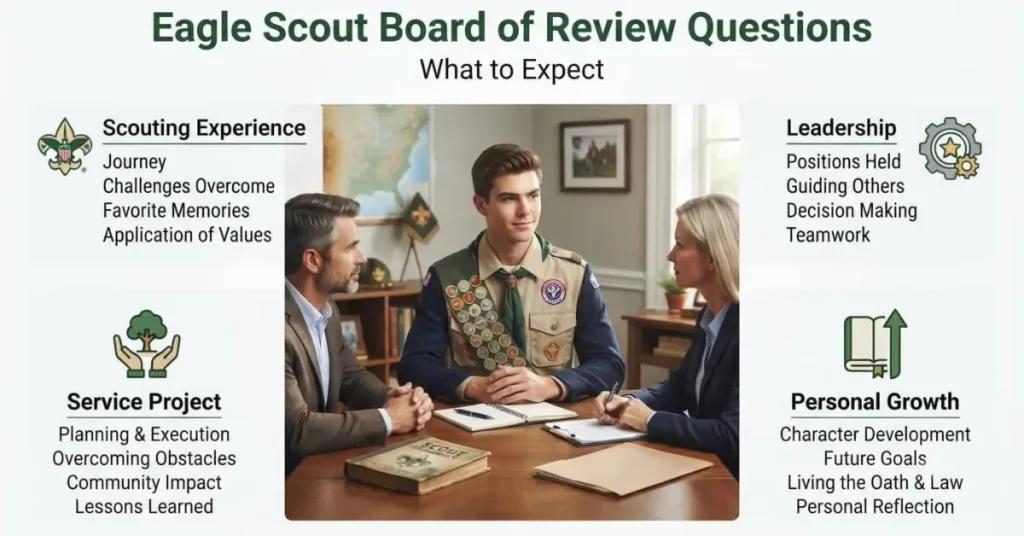
In this guide, you’ll find questions covering leadership, your Scouting experience, service project, Scout Oath and Scout Law, personal growth, and preparation. You’ll also learn what the board is generally trying to discover through these questions, so you can answer honestly and confidently rather than memorizing a script.
Common Eagle Board of Review Questions
Many Eagle Boards of Review begin with straightforward questions about your overall Scouting experience. These questions help the board get the conversation started and give you an opportunity to talk about the journey that brought you to this point.
Common questions include:
- Why did you decide to become an Eagle Scout?
- What has been your favorite part of Scouting?
- What is the most important thing you have learned in Scouting?
- Which merit badge did you enjoy the most, and why?
- Which merit badge challenged you the most?
- What accomplishment in Scouting are you most proud of?
- Who has had the greatest influence on you during your Scouting journey?
- What has Scouting taught you about responsibility?
- How have you changed since you first joined Scouting?
- What does becoming an Eagle Scout mean to you?
Don’t try to make every answer sound impressive. A specific story from your experience is often much stronger than a memorized statement.
Eagle Scout Board of Review Questions
The board may ask broader questions about your growth, character, leadership, and understanding of the Eagle Scout rank.
You might hear questions such as:
- What does the Eagle Scout rank mean to you?
- Why do you think you are ready to become an Eagle Scout?
- What have you learned from the requirements you completed?
- How has Scouting prepared you for life after high school?
- What Scout experience has had the greatest impact on you?
- What would you tell a younger Scout who wants to earn Eagle?
- What does leadership mean to you?
- How have you demonstrated leadership outside of Scouting?
- What challenges did you face while working toward Eagle?
- What would you do differently if you could start your Eagle journey again?
The strongest answers usually come from your own experiences. If a question reminds you of a particular event, explain what happened, what you did, and what you learned from it.
Questions to Ask at an Eagle Board of Review
An Eagle Board of Review is also a conversation. Depending on how the board conducts the review, you may have an opportunity to ask questions of the board members.
Consider questions such as:
- What has been your favorite experience in Scouting?
- What advice would you give a new Eagle Scout?
- What leadership lesson from Scouting has stayed with you?
- What do you think makes an effective leader?
- What advice would you give someone starting their Eagle project?
- How have you seen Eagle Scouts make a difference in their communities?
You don’t need to force a question simply to appear prepared. If something interesting comes up during the conversation, a genuine follow-up question can make the interaction feel much more natural.
Eagle Board of Review Leadership Questions
Leadership is an important part of the Eagle Scout experience, so expect questions about how you have worked with other people.
Examples include:
- Tell us about a time you led a group.
- What makes someone a good leader?
- What is the difference between being a leader and being the person in charge?
- Tell us about a leadership mistake you made.
- How did you handle disagreement within a group?
- How do you motivate people who don’t want to participate?
- What leadership skill are you still working on?
- How have you handled responsibility when things did not go according to plan?
- What did you learn from leading younger Scouts?
- Who is a leader you admire, and why?
Don’t be afraid to discuss mistakes. A thoughtful explanation of what went wrong and what you learned can demonstrate maturity.
Eagle Scout Experience Questions
Your time in Scouting gives the board plenty of material for conversation. Think beyond awards and requirements. The board is interested in the experiences behind them.
Possible questions include:
- What was your favorite camping experience?
- What was the most difficult Scouting experience you faced?
- What have you learned from working with younger Scouts?
- Which Scout activity taught you the most?
- What is one moment in Scouting you will always remember?
- How has Scouting affected your friendships?
- What skills from Scouting do you expect to use as an adult?
- How has Scouting changed your view of service?
- What experience made you more confident?
- What would you miss most about your Scouting years?
Before your board, think about three or four experiences that genuinely mattered to you. Those stories can help you answer many different questions naturally.
Eagle Scout Service Project Questions
Your Eagle Scout service project will likely be an important part of the discussion. Be prepared to explain not just what you built or organized, but how you planned and led the project.
Questions may include:
- Why did you choose this project?
- Who benefited from your project?
- How did you develop the project idea?
- What was the biggest challenge?
- How many people helped with the project?
- How did you organize the volunteers?
- What went wrong during the project?
- How did you solve unexpected problems?
- What did you learn about leadership?
- What would you change if you could do the project again?
- How did you communicate with adults and volunteers?
- What part of the project required the most preparation?
- How did you measure whether the project was successful?
Know your project well enough to discuss it comfortably. You don’t need to memorize every number in your project workbook, but you should understand the decisions you made and the lessons you gained.
Scouting Knowledge Board Questions
Some boards may ask questions that test your understanding of Scouting principles, traditions, or your experience in the program.
Possible questions include:
- What does the Scout Oath mean to you?
- What does the Scout Law mean to you?
- Which point of the Scout Law is most important to you?
- How do you demonstrate Scout values in everyday life?
- What does service mean to you?
- What is the importance of leadership in Scouting?
- How has Scouting prepared you to serve others?
- What does being trustworthy mean in practical terms?
- How can a Scout be a good example to younger Scouts?
The goal isn’t simply to recite definitions. Be ready to connect Scouting principles to real situations you’ve experienced.
Scout Oath and Scout Law Questions
The Scout Oath and Scout Law can lead to some of the most personal questions during a board.
You may be asked:
- Which part of the Scout Oath is most meaningful to you?
- Which point of the Scout Law is easiest for you to practice?
- Which point is most challenging?
- How do you live the Scout Law outside of Scouting?
- What does “help other people at all times” mean to you?
- How does the Scout Oath influence your decisions?
- Can you describe a situation where you followed the Scout Law?
- Has your understanding of the Scout Oath changed as you have gotten older?
There isn’t necessarily one perfect answer. The board is giving you an opportunity to explain what these principles actually mean in your life.
Eagle Board of Review Personal Questions
Personal questions may move the conversation beyond Scouting. These can help board members understand your goals, values, interests, and plans for the future.
Examples include:
- What are your plans after high school?
- What career interests you?
- What are you most proud of outside of Scouting?
- What is an important goal you have for the next few years?
- Who has influenced your character?
- What values are most important to you?
- What is one personal quality you want to improve?
- How do you handle failure?
- What does success mean to you?
- How do you hope to make a difference in your community?
You don’t need to have your entire future planned. If you’re still figuring things out, it’s perfectly reasonable to say so and explain what you’re currently interested in.
Eagle Board of Review Preparation Questions
Preparation should be about understanding your own experience, not memorizing dozens of scripted answers.
Before your board, ask yourself:
- Why did I want to become an Eagle Scout?
- What did I learn from my service project?
- What leadership challenge taught me the most?
- Which Scouting experience changed me?
- What mistake taught me an important lesson?
- Which Scout Oath or Scout Law principle matters most to me?
- How has Scouting affected my future goals?
- What advice would I give younger Scouts?
- What does service mean to me now?
- What does Eagle Scout mean to me personally?
Write down a few thoughts for each question, but don’t memorize complete paragraphs. You want your answers to sound like you, not like something you practiced word-for-word.
Eagle Scout Board of Review Tips
A little preparation can make the board feel much less intimidating.
Know your own story
Review your advancement history, leadership experiences, and service project. Be comfortable talking about the decisions you made and the lessons you learned.
Practice speaking naturally
Ask a parent, Scout leader, or trusted adult to conduct a practice conversation. Don’t focus only on getting the “right” answer. Practice explaining your thoughts clearly.
Use real examples
If you’re asked about leadership, don’t stop at “I am a good leader.” Explain a situation where you had to organize people, solve a problem, or make a difficult decision.
Don’t rush
Nervous Scouts sometimes answer questions before they’ve really thought about them. It’s okay to pause for a moment and collect your thoughts.
Be honest
You don’t need to pretend that every Scouting experience was perfect. Talking honestly about challenges can make your answers more meaningful.
Listen carefully
If you don’t understand a question, politely ask the board member to repeat or clarify it. That’s better than guessing what they meant.
Remember that you’re discussing your journey
The board isn’t a test where every answer has to sound impressive. Your experiences, growth, leadership, and character are the heart of the conversation.
What to Expect at an Eagle Board of Review
An Eagle Board of Review is an important step in the Eagle Scout process, but knowing what to expect can take away some of the uncertainty.
The board will generally talk with you about your Scouting experience, leadership, service, personal development, and understanding of the Eagle Scout rank. Questions can range from simple conversation starters to more reflective questions about your decisions and future.
You may be asked about your service project, leadership positions, Scout Oath and Scout Law, memorable experiences, challenges, and goals. Some questions may surprise you, and that’s okay. You don’t need to predict every question in advance.
The best preparation is knowing your own story. Think about what you accomplished, what challenged you, what you learned, and how Scouting has influenced the person you are becoming.
Most importantly, don’t try to sound like someone else. Speak honestly, take your time, and let the board see the person behind the achievements.
Conclusion
Preparing for Eagle Scout Board of Review questions is less about memorizing a perfect list of answers and more about understanding your own Scouting journey. The board may ask about your service project, leadership experiences, Scout Oath and Scout Law, challenges, accomplishments, or plans for the future, but all of those questions give you the same opportunity: explain what you learned and why it matters.
Spend some time reviewing your experiences and practicing with someone you trust. Think about the moments that challenged you, the people who helped you, and the experiences that changed how you see leadership and service.
When the board begins, take a breath and have a conversation. You have already done the work. Now you simply have the opportunity to tell your story.
FAQs
Author

Hi, I’m Alex, and I enjoy learning through quizzes, trivia, and interactive questions. I love discovering new conversation starters, relationship topics, and educational challenges. This website is my go-to place for fun, practical, and reliable question-based content. I’m always excited to learn something new and share it with others.